
American Bully Temperament — Full Personality Guide
American Bully Temperament — The Breed Standard
The american bully temperament is defined by the American Bully Kennel Club (ABKC) breed standard as “outgoing and stable, with a gentle and loving disposition.” This is not marketing language — it is the official breeding goal that defines what a correctly bred American Bully should be. Understanding the breed standard temperament helps buyers set accurate expectations and identify correctly versus incorrectly bred dogs.
The American Bully was specifically developed to produce this temperament in a muscular, physically impressive package. The companion temperament is not incidental — it is the core breeding objective of the breed from its founding in the late 1980s.
American Bully Temperament — Key Traits
Human Affiliation
The defining temperament characteristic of the American Bully is its intense bond with people. American Bullies are people-oriented to an unusual degree even among companion breeds. They actively seek human contact, follow their owners through the house, enjoy physical affection, and are happiest when with their people. This trait is consistent across all size classes and both genders.
Gentleness
Despite their physically imposing appearance, correctly bred American Bullies are gentle dogs — especially with children. The combination of physical power and behavioral gentleness is one of the breed’s most notable characteristics. An American Bully that is rough, impulsive, or difficult to manage with children is not displaying breed-typical behavior — it is either poorly bred, under-socialized, or both.
Confidence
American Bullies are confident, self-assured dogs that are not nervous, reactive, or easily startled. They approach new situations and new people with curiosity rather than anxiety. This confident stability is a critical temperament characteristic — a fearful, anxious American Bully is not correctly bred and should not be used for breeding.
Stability
Temperament stability means predictability — the dog behaves consistently in different situations and environments. A stable American Bully is the same dog at home, at the dog park, at the veterinarian, and on a busy city street. Reactivity, excessive barking, or inconsistent behavior are not breed-typical in a correctly bred specimen.
American Bully Temperament With Family
American Bullies form exceptionally strong bonds with their immediate family. They are loyal, affectionate, and attentive to family members of all ages. Separation anxiety is a common challenge because of this intense human bonding — American Bullies that are left alone for extended periods consistently develop destructive behaviors as a coping mechanism. Crate training from puppyhood and gradual alone-time conditioning are important management strategies.
American Bully Temperament With Children
The American Bully’s gentle, patient temperament makes it one of the best breeds for families with children. The breed is tolerant of the unpredictable movements and sounds of young children in a way that many breeds are not. However, management and supervision are always appropriate when any dog — regardless of breed — interacts with young children. The dog’s physical size and energy can inadvertently knock over small children during play.
| Situation | Typical American Bully Response |
|---|---|
| Meeting strangers | Friendly and interested |
| Children playing | Gentle, patient, engaged |
| New environments | Curious, confident |
| Loud noises | Investigative rather than reactive |
| Other dogs (familiar) | Friendly to playful |
| Other dogs (unfamiliar) | Variable — early socialization critical |
| Alone time | Tolerates but prefers company |
Human aggression is a disqualifying fault in ABKC American Bully conformation. Any American Bully displaying aggression toward people is not correctly bred — either the temperament genetics are wrong, the socialization was inadequate, or the dog has been mistreated. Do not excuse human aggression in an American Bully as a breed trait. It is not.
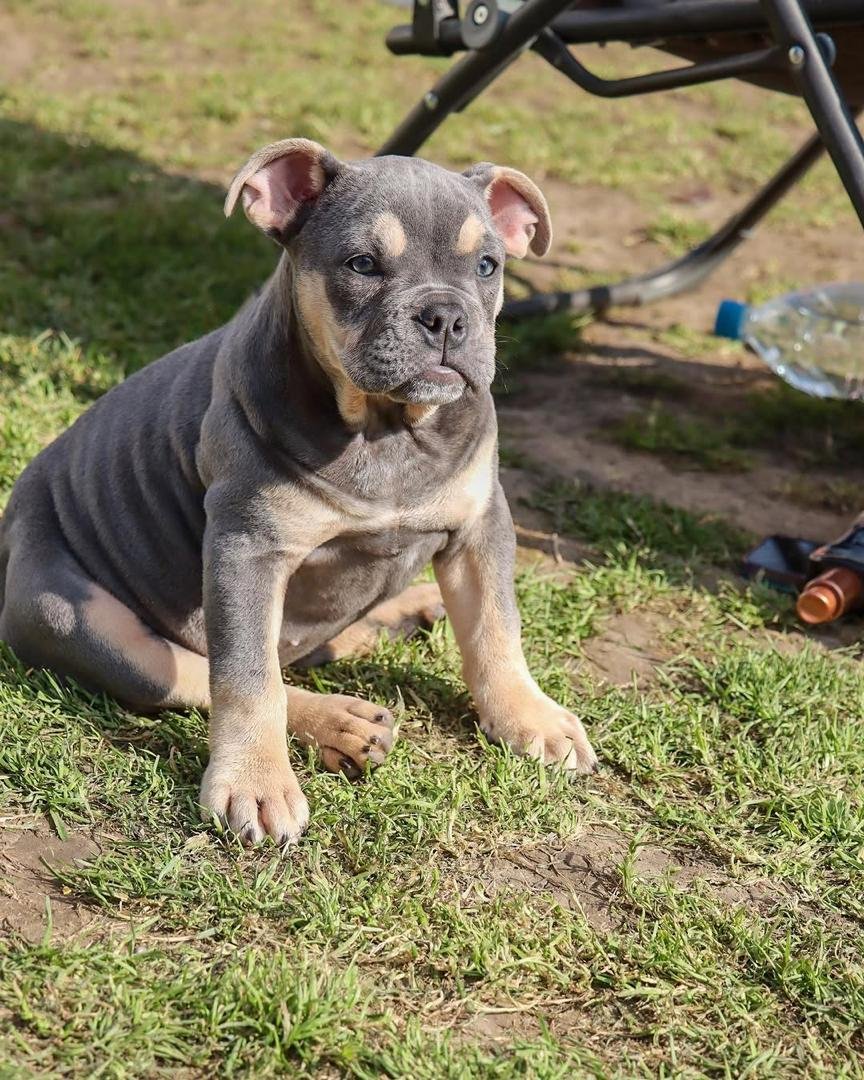
Missy — Blue/Grey Female — $850
American Bully Temperament With Other Dogs
Dog-to-dog sociability in American Bullies is more variable than human-directed behavior. Some American Bullies are highly dog-friendly throughout their lives. Others are selective — they get along with specific dogs but are uncomfortable with unfamiliar dogs. A small minority are dog-aggressive, particularly toward dogs of the same sex. Early and consistent socialization with other dogs during the critical 8 to 16 week window significantly improves adult dog-to-dog behavior.
What Affects American Bully Temperament
Breeding Quality
Temperament is substantially heritable. Dogs from stable, well-tempered parents produce stable, well-tempered offspring at a much higher rate than dogs from untested stock. At Majestic Bully Puppies every sire and dam is selected specifically for temperament stability — not just physical appearance. Our Razor Edge and Gottiline bloodlines carry a decades-long track record of producing the stable, human-oriented temperament the breed is known for.
Early Socialization
The critical socialization window (8 to 16 weeks) shapes how an American Bully perceives the world for its entire life. Puppies raised in social environments with regular human interaction, exposure to different people and situations, and positive early experiences develop the confident, stable temperament the breed standard calls for. Isolated puppies frequently become anxious, reactive adults regardless of their genetic potential.
See our American Bully Training Tips guide for socialization methods, and our American Bully Characteristics guide for the full breed profile.
American Bully Puppies For Sale — Majestic Bully Puppies
Champion bloodline American Bully puppies available now. All classes, all colors, ships to all 50 states.