
American Bully Allergies — Causes, Symptoms, and Treatment
American Bully Allergies — Why This Breed Is Prone
American bully allergies are one of the most common health complaints in the breed. The genetic makeup of the American Bully — drawing from bull terrier, Staffordshire, and bulldog ancestry — creates a predisposition to immune-mediated skin conditions that affects a significant percentage of the population. Understanding the difference between allergy types, how to identify specific triggers, and what treatment options are available makes management significantly more effective.
Types of American Bully Allergies
Environmental Allergies (Atopic Dermatitis)
The most common allergy type in American Bullies. Triggered by airborne allergens that contact or penetrate the skin — grass pollens, tree pollens, weed pollens, mold spores, house dust mites, and storage mites. Unlike human hay fever where the primary symptom is respiratory, canine environmental allergies primarily manifest as skin symptoms.
Key characteristics: typically seasonal at onset (though they become year-round in heavily affected dogs), most prominent between ages 1 and 3, and progressively worsens over time without management.
Food Allergies
True food allergies (IgE-mediated immune responses to specific proteins) are less common than environmental allergies but significant in the Bully population. The most common food allergens in dogs are beef, chicken, dairy, wheat, egg, soy, and lamb — in approximately that order of frequency. Food allergies produce year-round symptoms that do not vary with season.
Flea Allergy Dermatitis (FAD)
Hypersensitivity to flea saliva — the most common allergy across all dog breeds. A single flea bite can trigger severe localized itching in an allergic dog. American Bullies with FAD often show intense scratching at the base of the tail, lower back, and inner thighs. Year-round flea prevention eliminates this trigger entirely.
Contact Allergies
Reactions to substances the skin directly contacts — certain plastics (plastic food bowls), rubber, fabric dyes, carpet cleaners, or topical products. Less common than the above types but worth considering if symptoms localize to contact areas.
Symptoms of American Bully Allergies
| Symptom | Most Likely Allergy Type |
|---|---|
| Itching paws, licking feet | Environmental or food |
| Rubbing face on carpet or furniture | Environmental or food |
| Recurring ear infections | Food or environmental |
| Seasonal itching | Environmental (pollen) |
| Year-round itching | Food, dust mites, or FAD |
| Itching at base of tail | Flea allergy (FAD) |
| Hives or facial swelling | Acute allergen exposure |
| Loose stools with itching | Food allergy |
Recurring ear infections in American Bullies are almost always a sign of underlying allergic disease — environmental or food — not a primary ear problem. Treating the ear infection without addressing the allergy leads to repeated infections every few months indefinitely.
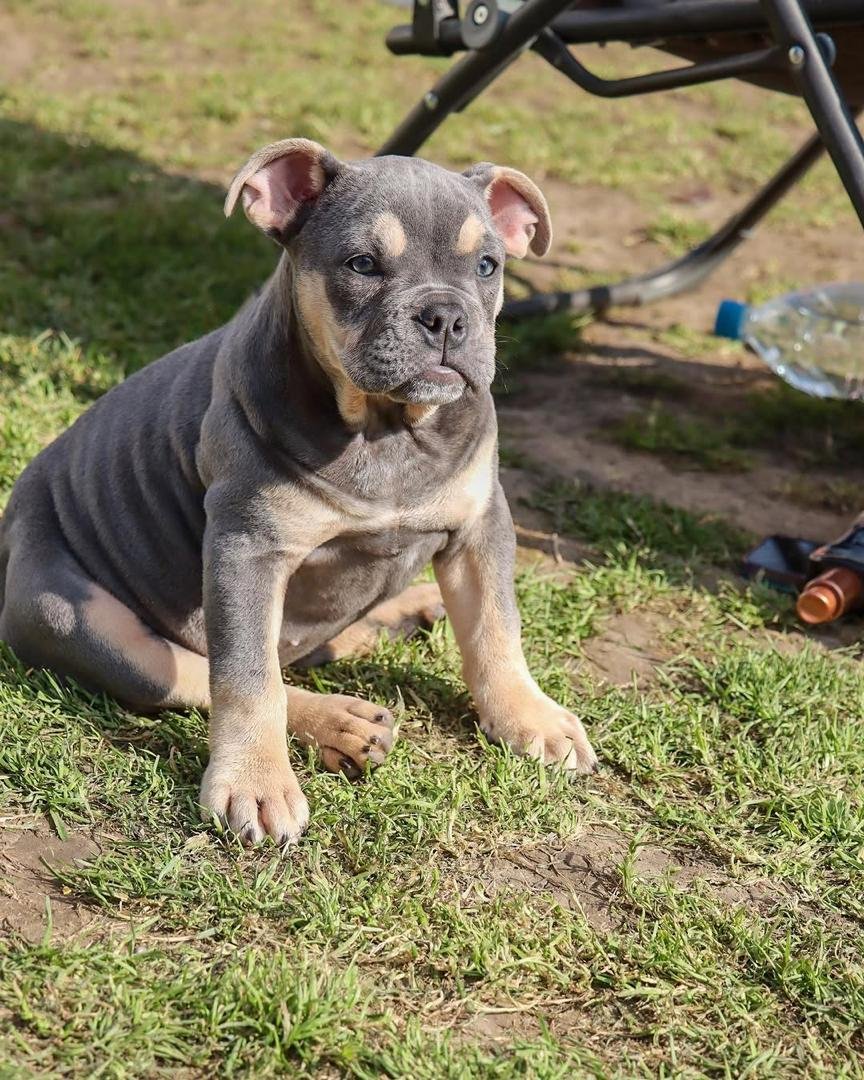
Missy — Blue/Grey Female — $850
Diagnosing American Bully Allergies
Environmental Allergy Testing
Intradermal skin testing (performed by a veterinary dermatologist) is the gold standard for identifying specific environmental allergens. Blood serology tests (e.g. HESKA, Spectrum Labs) are more accessible but have variable accuracy — false positives are common. Results from allergy testing are used to formulate allergen-specific immunotherapy (allergy shots or sublingual drops).
Food Allergy Diagnosis
The only reliable method for diagnosing food allergies is a strict dietary elimination trial — 8 to 12 weeks on a hydrolyzed protein diet or novel protein the dog has never eaten before (kangaroo, venison, duck, or rabbit are common choices). All other food sources must be eliminated during this period including treats, flavored medications, and chews. If symptoms improve significantly on the elimination diet, ingredients are reintroduced one at a time to identify specific triggers.
Treatment Options for American Bully Allergies
- Apoquel (oclacitinib) — fast-acting JAK inhibitor that reduces itch within 4 hours, daily oral medication
- Cytopoint — injectable monoclonal antibody that blocks itch signal, lasts 4 to 8 weeks per injection
- Allergen-specific immunotherapy — allergy shots or drops that desensitize the immune system over 12 to 24 months
- Medicated shampoos — removes environmental allergens from skin, reduces bacterial and yeast secondary infections
- Fish oil supplementation — strengthens skin barrier, reduces inflammatory response
- Year-round flea prevention — eliminates FAD trigger completely
See our American Bully Skin Problems guide for related conditions, and our American Bully Health Problems guide for the full range of conditions to watch for in the breed.
American Bully Puppies For Sale — Majestic Bully Puppies
Champion bloodline American Bully puppies available now. All classes, all colors, ships to all 50 states.