
American Bully Skin Problems — Causes, Symptoms, and Solutions
American Bully Skin Problems — Why This Breed Is Prone
American bully skin problems are among the most common health concerns in the breed. The American Bully’s genetic makeup — a combination of bull terrier, Staffordshire terrier, and bulldog ancestry — predisposes them to skin conditions more than most other breeds. Understanding the causes, recognizing symptoms early, and knowing the right treatments helps you manage these issues effectively.
The most important thing to know: most American Bully skin problems are manageable with the right diagnosis and approach. The mistake most owners make is treating symptoms without identifying the root cause — which leads to repeated problems that never fully resolve.
Most Common American Bully Skin Problems
Environmental Allergies (Atopic Dermatitis)
The most prevalent skin condition in American Bullies. Triggered by airborne allergens — grass pollen, tree pollen, mold spores, dust mites — that contact the skin. Symptoms include persistent itching (especially of the paws, face, and belly), redness, and secondary infections from repeated scratching. Typically seasonal in onset but can become year-round in heavily affected dogs.
Food Allergies and Intolerances
Food allergies in American Bullies most commonly involve chicken, beef, dairy, wheat, corn, or soy. Unlike environmental allergies, food allergy symptoms are year-round. Signs include facial rubbing, recurring ear infections, generalized itching, and loose stools. Diagnosis requires a strict elimination diet — typically 8 to 12 weeks on a novel protein source the dog has never eaten before.
Hot Spots (Acute Moist Dermatitis)
Rapidly developing, localized areas of skin infection most often triggered by self-trauma — licking, chewing, or scratching one spot repeatedly. American Bullies develop hot spots most commonly on the face, neck, and hip areas. The skin becomes red, moist, and painful within hours. Treatment requires clipping the surrounding hair, cleaning the area, and addressing the underlying trigger.
Demodectic Mange
Caused by Demodex mites that normally live harmlessly on dog skin. In puppies or immunocompromised adults these mites can proliferate causing localized or generalized hair loss, scaling, and skin thickening. Localized demodectic mange in puppies often resolves on its own as the immune system matures. Generalized mange requires veterinary treatment.
Bacterial Folliculitis
Bacterial infection of hair follicles — usually Staphylococcus pseudintermedius — producing pustules, crusting, and hair loss. Often a secondary condition following allergic skin disease, as the damaged skin barrier allows bacteria to penetrate. Requires antibiotic treatment — topical for mild cases, oral for moderate to severe.
Yeast Dermatitis (Malassezia)
Yeast overgrowth — typically Malassezia pachydermatis — in skin folds, ear canals, and between the toes. Produces a characteristic musty odor, greasy skin, and rust-colored staining of the coat from licking. American Bullies with skin folds (face, tail pocket, vulvar fold) are especially prone. Requires antifungal treatment and consistent cleaning of affected areas.
| Condition | Primary Symptom | Typical Location | Treatment |
|---|---|---|---|
| Environmental allergy | Seasonal itching | Paws, face, belly | Apoquel, Cytopoint, immunotherapy |
| Food allergy | Year-round itching | Face, ears, paws | Elimination diet, novel protein |
| Hot spot | Sudden moist lesion | Neck, hip, face | Clean, dry, treat underlying cause |
| Demodectic mange | Hair loss, scaling | Face, legs, trunk | Isoxazoline parasiticides |
| Bacterial folliculitis | Pustules, crusting | Trunk, belly | Antibiotics (topical or oral) |
| Yeast dermatitis | Odor, greasy skin | Folds, ears, toes | Antifungal shampoo, oral antifungals |
Puppies from OFA health tested parents have significantly lower rates of immune-mediated skin disease. At Majestic Bully Puppies every breeding dog is health tested before entering our program specifically to reduce the incidence of these hereditary conditions in our puppies.
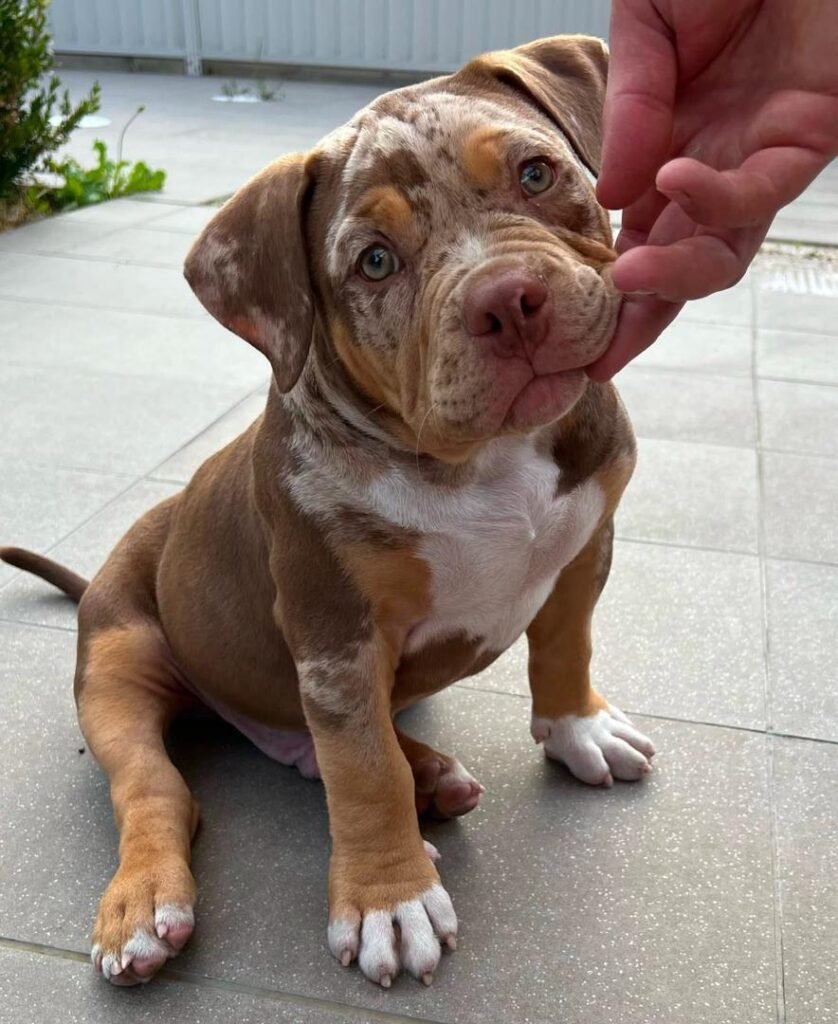
Donnie — Chocolate Merle Male — $850
Prevention — Best Practices for American Bully Skin Health
- Bathe every 2 to 4 weeks with a hypoallergenic or medicated shampoo — not human shampoo
- Clean skin folds daily with a damp cloth or pet-safe wipe
- Feed a high-quality diet without artificial colors, corn, wheat, or soy
- Keep parasite prevention current — fleas are a major skin allergy trigger
- Add fish oil to the diet for omega-3 fatty acids that support the skin barrier
- Dry the coat thoroughly after bathing — moisture in folds causes yeast growth
See our American Bully Health Problems guide for other common conditions, and our American Bully Allergies guide for a deeper dive into allergy management.
American Bully Puppies For Sale — Majestic Bully Puppies
Champion bloodline American Bully puppies available now. All classes, all colors, ships to all 50 states.